
Top 10 Automated Code Review Tools in 2026
5/3/26
By:
Jessie Pratz
Discover the top automated code review tools that enhance code quality, security, and developer productivity.
What are Automated Code Review Tools?
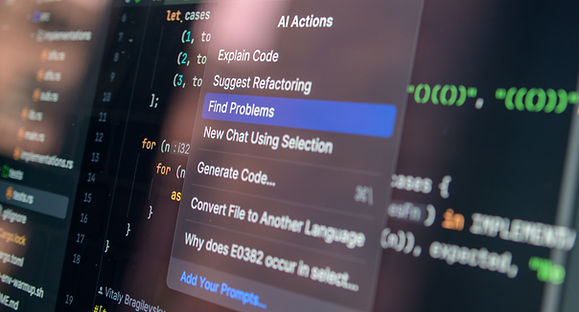
Automated code review tools are software systems that analyze source code using static analysis, machine learning, and rule-based engines to detect bugs, vulnerabilities, style violations, and maintainability issues. These tools integrate into development workflows—such as CI/CD pipelines, version control systems, and IDEs—to provide real-time or post-commit feedback. They reduce manual review effort, enforce coding standards, and improve overall software quality by identifying issues early in the development lifecycle.
Why Automated Code Review Tools are Important
Automated code review tools are critical in modern software engineering due to increasing code complexity, distributed teams, and rapid deployment cycles. They ensure consistent code quality by applying standardized rules across all contributions. Security vulnerabilities can be identified before reaching production, reducing risk exposure. These tools also accelerate development by minimizing repetitive manual reviews and enabling developers to focus on architectural and logic-level improvements. Additionally, they provide traceability, compliance support, and actionable insights through metrics and reporting.
Top 10 Best Automated Code Review Tools
1. SonarQube
SonarQube is a code quality and security verification platform that integrates into CI/CD pipelines and pull requests. It analyzes 40+ languages to detect maintainability issues, reliability risks, and security vulnerabilities before release. Customizable quality gates block merges that fail defined standards, and AI features automatically write fixes that maintain the code’s integrity.
Key Features
Automated AI Code Review: Continuous inspection of code to detect bugs, vulnerabilities, and code smells, helping teams maintain high software quality and reduce technical debt.
Pull Request Decoration: Integrates with Git platforms to provide inline feedback on pull requests, highlighting security issues, maintainability problems, and reliability concerns before AI code is merged.
Quality Gates: Enforce quality and security standards by automatically blocking merges when new AI code fails defined thresholds for issues, coverage, or duplication.
Security Vulnerability Detection: Built-in static application security testing (SAST) and vulnerability scanning that identify security weaknesses and help developers apply secure coding practices to AI-generated code.
Code Coverage Integration: Connects with testing frameworks to display unit test coverage and test results, ensuring new AI code changes meet quality benchmarks.
Multi-language Support: Supports analysis for 40+ programming languages commonly generated by AI (such as Java, JavaScript, Python, C#, and more) within a unified code quality and security platform.
Pros
Ideal for teams that want deep code quality and security analysis integrated into their development workflow as they adopt AI coding tools.
Provides powerful static application security testing (SAST), vulnerability scanning, and automated code review to detect bugs, vulnerabilities, and code smells while reducing technical debt.
Cons
Requires separate CI/CD integration rather than acting as a self-contained DevOps platform.
Advanced features such as enterprise governance, portfolio management, and security reporting require higher-tier editions.
2. Codacy
Codacy automates code reviews and tracks code quality across repositories. It integrates seamlessly with Git platforms and provides real-time feedback.
Features:
Automated code reviews on pull requests
Code coverage tracking
Security issue detection
Customizable rulesets
Multi-language support
Pros:
Easy integration with Git workflows
Clean UI and actionable insights
Supports multiple static analysis engines
Cons:
Limited customization in free tier
Occasional false positives
3. DeepSource
DeepSource focuses on continuous code health by combining static analysis with autofix capabilities to resolve issues automatically.
Features:
Autofix suggestions for common issues
Dependency vulnerability scanning
Test coverage insights
Multi-language support
CI/CD integration
Pros:
Automated fixes reduce manual effort
Developer-friendly interface
Strong security analysis
Cons:
Limited enterprise customization
Pricing scales with usage
4. CodeClimate
CodeClimate provides automated code review and maintainability insights, helping teams monitor technical debt and improve long-term code health.
Features:
Maintainability scoring
Test coverage reporting
Static analysis plugins
Pull request reviews
Workflow automation
Pros:
Clear maintainability metrics
Easy GitHub integration
Supports team collaboration
Cons:
Limited language support compared to competitors
Premium pricing for advanced features
5. Review Board
Review Board is a web-based code review tool that supports both manual and automated review processes with extensible integrations.
Features:
Pre-commit and post-commit reviews
Integration with SCM systems
Inline commenting and diff views
Plugin support
Workflow customization
Pros:
Flexible deployment options
Strong review workflow support
Open-source availability
Cons:
UI feels outdated
Requires manual configuration for automation
6. Phabricator (Phorge fork)
Phabricator, now continued as Phorge, is a comprehensive development platform that includes automated code review capabilities.
Features:
Differential code review system
Static analysis integration
Repository hosting
Task and bug tracking
Extensible architecture
Pros:
All-in-one development platform
Highly customizable
Strong community support
Cons:
Steep learning curve
Maintenance overhead
7. GitHub CodeQL
CodeQL is GitHub’s semantic code analysis engine that identifies security vulnerabilities using query-based analysis.
Features:
Semantic code analysis
Custom query language (QL)
Integration with GitHub Actions
Security vulnerability detection
Supports multiple languages
Pros:
Deep security insights
Native GitHub integration
Highly customizable queries
Cons:
Requires expertise to write queries
Primarily focused on security
8. Snyk Code
Snyk Code specializes in security-focused code analysis using machine learning to detect vulnerabilities in real time.
Features:
Real-time vulnerability detection
AI-driven analysis
IDE integrations
Open-source dependency scanning
CI/CD integration
Pros:
Strong security focus
Developer-first approach
Fast scanning performance
Cons:
Less emphasis on code style
Pricing can be high for large teams
9. Crucible (Atlassian)
Crucible is a collaborative code review tool by Atlassian that supports automated checks alongside peer reviews.
Features:
Inline code reviews
Workflow automation
Integration with Jira and Bitbucket
Pre-commit review support
Reporting and metrics
Pros:
Strong team collaboration features
Seamless Atlassian ecosystem integration
Flexible workflows
Cons:
Not fully automated compared to modern tools
Licensing costs
10. ESLint (with automation pipelines)
ESLint is a widely used static analysis tool for JavaScript that can be automated within CI pipelines for continuous code review.
Features:
Custom linting rules
Plugin ecosystem
Integration with editors and CI/CD
Auto-fix capabilities
Real-time feedback
Pros:
Highly customizable
Strong ecosystem support
Lightweight and fast
Cons:
Limited to JavaScript/TypeScript
Requires configuration effort
How to Choose the Best Automated Code Review Tools
Selecting the best automated code review tool depends on several technical and organizational factors. Language support is critical—ensure the tool supports your tech stack. Integration capabilities with CI/CD pipelines, version control systems, and IDEs determine workflow efficiency. Evaluate the depth of analysis, including security (SAST), maintainability, and style enforcement. Customization options allow teams to tailor rules to internal standards. Scalability and performance are essential for large codebases. Finally, consider cost, licensing, and support when choosing between open-source and enterprise solutions.
The Future of Automated Code Review Tools
The future of automated code review tools is driven by advancements in artificial intelligence and large language models. Tools are evolving from rule-based systems to context-aware platforms capable of understanding code semantics and developer intent. AI-powered suggestions will increasingly include architectural improvements, not just syntax corrections. Integration with DevSecOps pipelines will become deeper, enabling continuous security validation. Predictive analytics will identify risk patterns before code is written. As software complexity grows, automated code review tools will become indispensable for maintaining scalable, secure, and high-quality systems.
Latest News